
By Gwen Rockwood, newspaper columnist and mom of 3
I don’t know how old I was when my parents let me answer our family’s phone, but I was younger than most. In the early 1980s, my dad was a landscaper and tree trimmer, so our house phone was also his business line. Missing a call often meant missing a customer.
As the youngest in the family, I was thrilled when I got permission to answer a call because using a phone symbolized something every kid wants, both then and now — the acknowledgment that you’re not a baby anymore. You’re big enough to do a few things that were once reserved for grown-ups or older siblings. Finally, I had come of phone-age.
When the phone rang, I’d fly down the stairs and sprint past the kitchen table to get to it. Our kitchen phone – a dark mustard color called “Harvest Gold” – hung on the wall above a small table with a notepad, a cup of pens, and a stack of mail that often cascaded to the floor whenever the phone’s long, curly cord swung by it.
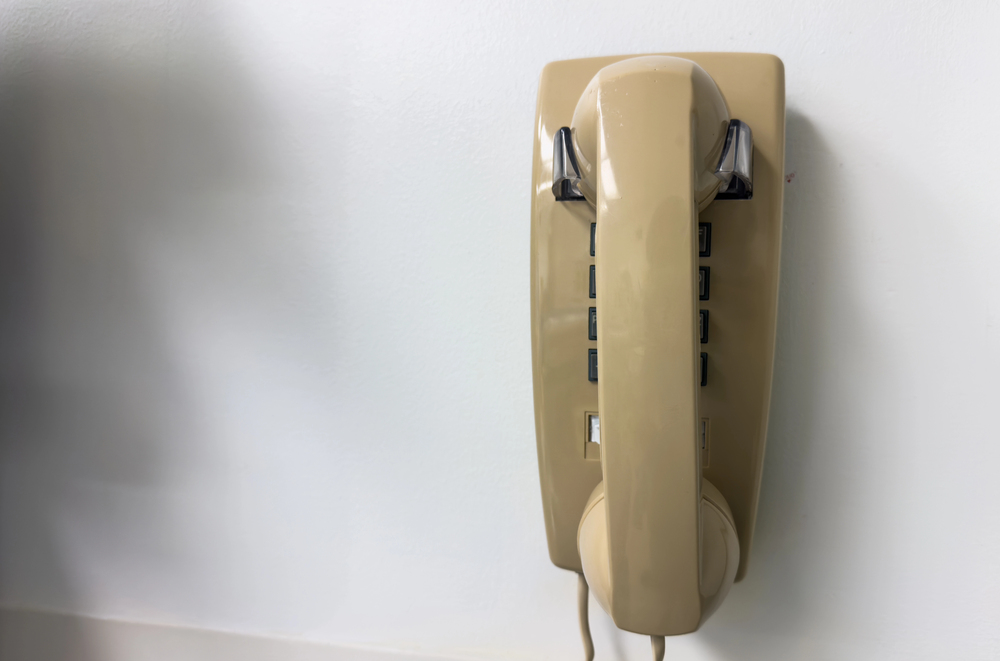
Back then, every phone call was its own little mystery. You had to answer to find out who and what it was all about. If I ran fast enough, I could get to it by the third ring and answer with my most adult-sounding version of this: “Magnolia Landscape and Tree Service. How can I help you?”
Often, the caller wanted to talk to my dad about a dead tree, but upon hearing that he was still at work, they’d settle for leaving a message, which I dutifully jotted down in detail like an aspiring writer.
But sometimes, the call was from my friend, which felt like the best and highest use for any phone. As I got older, I’d stretch the phone’s curly cord into the nearby laundry room, which closed with a sliding door. I’d sit on the floor with the phone cradled between my shoulder and jaw, and Jennifer and I would dissect the daily dramas of middle school while the washing machine sloshed and swished behind me. To this day, the smell of Downy and dryer sheets reminds me of long talks with a great friend.
Time passed. Technology evolved. Eventually, we replaced that mustard-colored relic with a sleek black handset that could go anywhere in the house. And by the time I moved to college, I had a giant bag in my backseat with a clunky mobile phone inside that my mom said should only be used if I was dying in a ditch or about to be abducted.
Fast forward 30 years, and now we’re using pocket-sized phones that can pay for gas at the pump, translate other languages, alert us when Grandma falls, take a video of a baby’s first steps, and then post it seconds later to a global audience. If I could call back through time to that harvest gold phone and tell her what she’d become, she’d probably hang up on me — convinced it must be a prank call.
But not every advancement is good for kids. If you’ve raised someone who’s part of Generation Z, you’ve likely seen some of the downsides of a smartphone-saturated childhood. Studies show that rates of teenage anxiety and depression have soared since the arrival of smartphones and social media.
Thankfully, many parents are now delaying their kids’ use of smartphones until they’re old enough to drive. Some of them are bringing back a traditional landline and older corded phones. Last week, I saw an ad for a phone that looked nearly identical to the wall-mounted phone I used in the ’80s, but it has now been re-branded as a “Tin Can” phone. Suddenly, its short list of features is exactly what parents want for their kids — no screens, apps, cameras, internet access, or unknown callers. Parents set up a list of who can call, and they designate times when it can’t ring at all. But the Tin Can phone kept that iconic curly cord that prevents it from being brought to the dinner table.
For kids under 16, I hope simpler phones make a comeback. I’m glad I had one as a kid because it allowed me to practice real-time conversations with real people, learning to listen, respond, and take turns with someone who genuinely cared — not an artificially intelligent chatbot programmed to pretend to.
Who knows? Maybe “dumb” phones can help kids come of phone-age without throwing them into the deep end of the internet.
Gwen Rockwood is a syndicated freelance columnist. Email her at gwenrockwood5@gmail.com. Her book is available on Amazon.