
By Gwen Rockwood, newspaper columnist, novelist, and mom of 3
There are two types of people – people who like to dance and people who would rather have their eyebrows removed with a rotary sander.
Particularly for men, dancing — or not — is often a self-defining characteristic. “Hi. My name is Joe. I’m a Caucasian male. I have a dog. I drive a Ford. I don’t dance.” Non-dancers are typically firm in their conviction never to shake their groove thang, no matter how joyous the occasion or how many cocktails they’ve had.
But here’s my theory: Everybody likes to dance. Not only do we like it, we feel a natural compulsion to do it. But some people, like the hypothetical Joe mentioned earlier, would rather step in front of a speeding bus than be caught dancing.
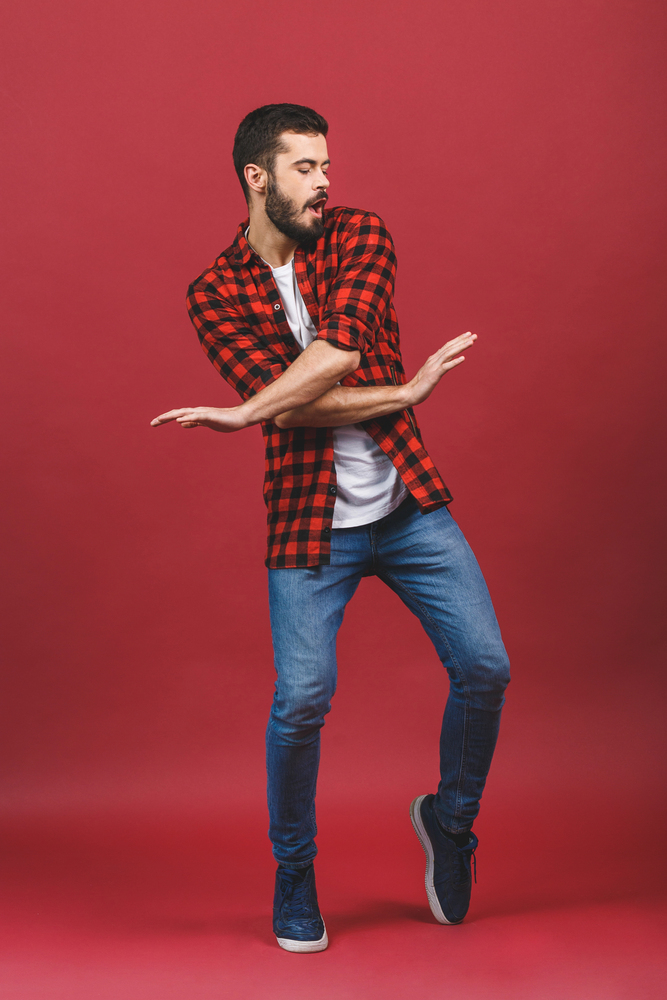
Dancing probably makes him feel vulnerable – like waking up naked in the middle of the junior high cafeteria. But even the staunchest non-dancer in the world will groove in secret when no one else is around and the song “Superfreak” by Rick James or “Brick House” by the Commodores starts playing. It’s as reflexive as blinking.
Having raised three humans, I can back up this theory that people are born with a dancing gene. Shortly after my firstborn started sitting up, he started dancing. I noticed it one day when I rounded the corner and found him playing with a musical toy while bobbing up and down like a cork on water. When the music stopped, so did the bobbing. When the music began again, so did he.
We never taught him to do it. We didn’t even think it would be possible for a baby at that age. But it came so naturally, which felt like proof of the dancing gene theory. When he learned to stand, he got his knees involved and began doing a more energetic, full-body bobbing motion. Then he added a side-to-side sway to his repertoire, waving his hands in the air while smiling as big as his face would allow. He danced to the beat of TV commercial jingles and the Wheel of Fortune theme song.
When he was 9, he’d wander into the kitchen whenever I was playing music so he could do a few break-dancing moves he assured me were very cool. He was always joined by his 7-year-old brother and 4-year-old sister, who boogied so hard she often landed with a thud on her backside before scrambling back onto her feet to continue the show.
If this natural dancing gene is real, then it’s inside us for life. But somewhere along the way, many of us repress it. Perhaps it’s puberty that makes us decide that looking cool and in control is more important than anything else. It’s a shame, really, because dancing feels so good – a welcome break from the same old monotonous movement we usually do. A good dance session is like a good cry or a good laugh – it releases natural endorphins that make you feel better, no pharmaceuticals required.
Some of the happiest times I remember from college were the nights I spent out dancing with my friend and neighbor, J.C. When we first went to a dance club on “Trash Disco” night, we were both hoping to meet someone cute and single. But after a few nights with no Mr. Right in sight, we realized that dancing felt so much better than waiting around for a prince with a glass slipper. So we made dancing the singular reason for our nights out, and anyone we met along the way was just a nice bonus.
If we really liked a song, we’d dance with almost anyone who asked. When the music stopped and the club closed, we’d wave goodbye to the dance partners and go home to our tiny apartments, happy and exhausted. We burned more calories on the dance floor than we ever did on the treadmill and had so much more fun in the process.
Whether it’s in public, in the privacy of your own kitchen, or even at a stoplight in your car, I hope you “bust a move” this week. Play the song that compels your body to move, even when your judgmental brain doesn’t approve. Life is too short to watch from the edge of the dance floor.
Gwen Rockwood is a syndicated freelance columnist. Email her at gwenrockwood5@gmail.com. Her book is available on Amazon.